Why health advice does not work the same for everyone
Begin with why the same advice can help one body and miss another.
Understanding your body’s language
Most health advice begins with what should work. Tong Living begins with what is actually happening in your body: when something appears, what comes with it, and what makes it better or worse.
These articles use Chinese medicine as a practical framework for reading those patterns and finding a response that fits. They are designed to help you ask a better question, not diagnose yourself from one symptom. The book Tong Living Everyday Chinese Medicine: for the Way Your Body Works brings the full method together. If a term is unfamiliar, use the Practical Chinese Medicine Glossary.
Begin with why the same advice can help one body and miss another.
Learn which details turn a symptom into a more useful picture.
Use six practical directions to choose one fitting response and check the result.

Period symptoms can change from month to month. Learn which details are useful to track, what Chinese medicine adds, and when symptoms need medical care.
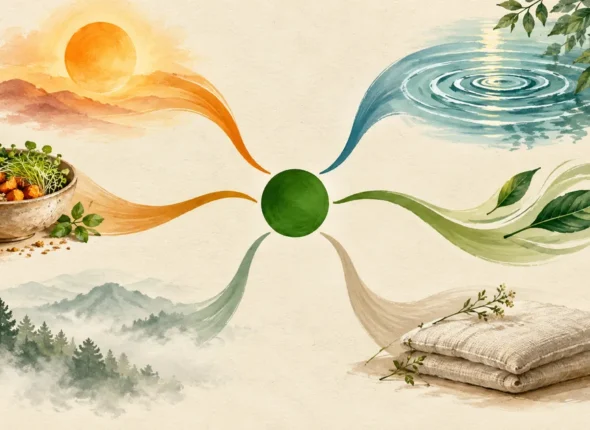
Warm, cool, move, nourish, clear or rest. The six Tong Living directions turn what you notice into one fitting response, followed by a check-in.

Stress can affect appetite, gut sensitivity and bowel movement, but the direction differs. Learn what to notice when pressure reaches your digestion.

Chinese medicine does not say everyone should eat warm food. Learn what warming and cooling mean, who may benefit, and how to test your response safely.

A breathing practice suits you when it moves your body in the direction it currently needs. Learn how to distinguish wound up, worn out and stuck.

Stress can make the breath quick, shallow, held or interrupted by sighs. These changes are useful clues, but no single breathing pattern tells you what is wrong.

Deep breathing is meant to be calming, but it can sometimes cause dizziness, anxiety or more tension. The useful change may be a softer breath, not a bigger one.

Stress may become visible in your jaw, shoulders, breathing, digestion, sleep or energy before you consciously feel overwhelmed. Learn which details make those signals useful.

Exhaustion and sleepiness are not the same state. Learn how timing, activation, physical discomfort and the effort to sleep can leave a tired body awake.

Qi is often translated as energy, but its practical meaning is broader. Learn how Chinese medicine uses Qi to describe capacity, movement, timing and recovery.