Practical Chinese Medicine Library
Food and digestion
Food advice often begins with a list of ingredients that should be healthy. Digestion asks a different question: What happens when this person eats this food, in this form, at this time and under these conditions? A meal can be nutritious on paper and still leave someone bloated, cold, heavy or exhausted. That response deserves context rather than blame.
This guide follows four common questions. It starts with bloating after healthy food, then looks at whether warm or cold preparation changes the result. Post-meal fatigue adds timing, meal size and the wider energy pattern. Stress-related stomach symptoms show why the conditions around eating can matter alongside the food itself.
Use the articles to compare repeated patterns, not to create a stricter food rule. Notice preparation, appetite, pace, temperature, portion, time of day and what else was happening. Persistent pain, vomiting, blood in the stool, unintended weight loss, trouble swallowing or a major change in bowel habits needs medical assessment. Chinese medicine can organize observations, but it does not replace diagnosis.
Suggested reading order
- Start hereWhy Do I Feel Bloated After Eating, Even When the Food Is Healthy?
See why the quality of a food and your response to it are different questions.
- Test preparationShould You Eat Warm or Cold Foods? A Chinese Medicine Guide
Compare temperature and preparation without turning either choice into a universal rule.
- Follow your energyWhy Do I Feel Tired After Eating? What the Timing and Type of Meal Can Tell You
Use timing, meal size and companion signs to read post-meal fatigue.
- Add the stress contextWhy Does Stress Upset My Stomach? What the Gut-Brain Connection Can Tell You
Understand how urgency, bracing and emotional strain can change digestion.

Why Does Stress Upset My Stomach? What the Gut-Brain Connection Can Tell You
Stress can affect appetite, gut sensitivity and bowel movement, but the direction differs. Learn what to notice when pressure reaches your digestion.
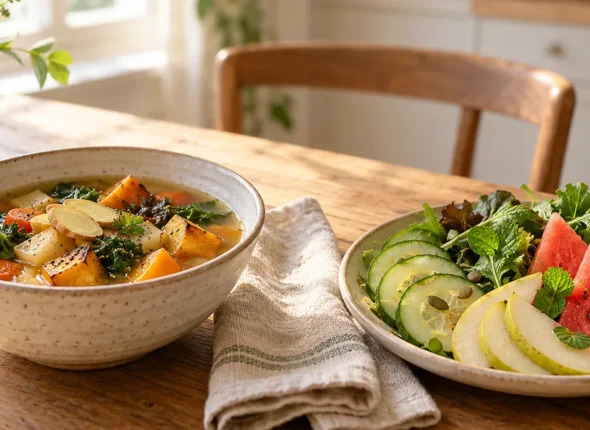
Should You Eat Warm or Cold Foods? A Chinese Medicine Guide
Chinese medicine does not say everyone should eat warm food. Learn what warming and cooling mean, who may benefit, and how to test your response safely.
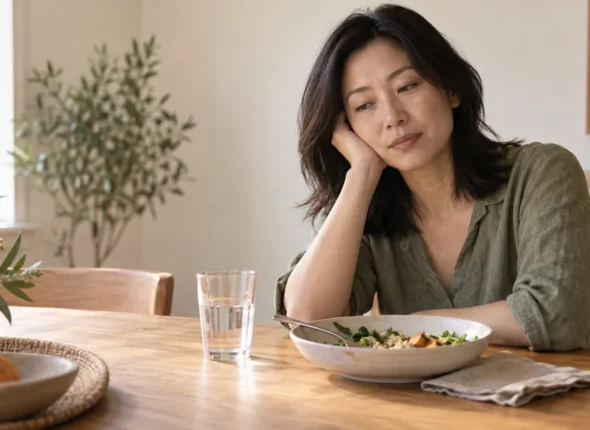
Why Do I Feel Tired After Eating? What the Timing and Type of Meal Can Tell You
A mild dip after eating can be ordinary. A strong or repeatable crash may be different. Learn what timing, meal size, sleep and other symptoms can reveal.

Why Do I Feel Bloated After Eating, Even When the Food Is Healthy?
A meal can be nutritious and still leave you uncomfortably full. Learn how to read the response without labeling the food bad or ignoring what your body is telling you.