
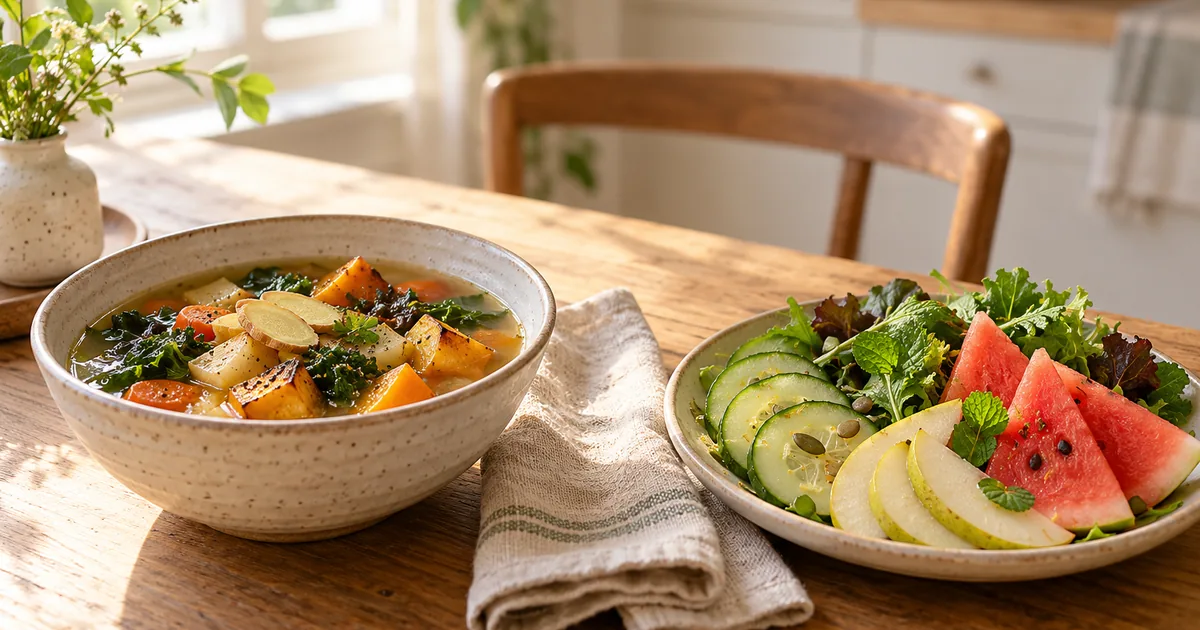
A cold smoothie can feel bright and easy for one person and leave another chilled, bloated, and hungry an hour later. A bowl of soup can feel grounding in winter and far too heavy on a hot afternoon.
The short answer
Chinese medicine does not say that everyone should eat warm food or avoid cold food. It asks what quality the meal brings and whether that quality fits your present state, digestion, climate, and season.
If you often feel cold, sluggish, or uncomfortable after raw and chilled meals, more cooked and gently warming food may be worth testing. If you run hot, feel thirsty, or become uncomfortable after rich and spicy food, a lighter and more cooling meal may fit better. Neither direction is a permanent identity, and neither replaces a nutritionally adequate diet.
What does “warming” or “cooling” food mean in Chinese medicine?
In Chinese medicine, warming and cooling describe the traditional effect or direction assigned to a food. They are not simply a thermometer reading.
Ginger is described as warming even after it has cooled. Watermelon is described as cooling even when it is served at room temperature. Cooking method also changes the message. A long-cooked stew is generally more warming and concentrating than a raw salad made from similar ingredients.
This is traditional food language, not a biomedical classification. It does not mean ginger literally raises core temperature or that cucumber treats a medical condition. Its practical use is to help you compare the quality of a meal with the way your body is responding.
Is physically hot food always better for digestion?
No. The modern research on meal temperature is limited and does not justify a universal rule. Small studies of liquids have found temporary changes in gastric emptying at very hot or very cold temperatures, but they involved few participants and do not prove that everyone digests warm meals better.
What matters more is your repeatable response. Does a very cold drink reliably bring cramping or discomfort? Does a warm breakfast leave you steadier than a chilled one? Does hot, greasy food worsen reflux or fullness? Those observations can guide a small experiment without turning temperature into a doctrine.
For persistent indigestion, a clinician or registered dietitian can help identify causes and maintain adequate nutrition. Different people with functional dyspepsia can react to different foods, which is one reason personal observation matters.
When might warmer food fit better?
Consider a warmer direction when several clues travel together:
- you feel cold easily, especially after eating;
- your appetite is weak in the morning;
- chilled or raw meals repeatedly leave you bloated or heavy;
- you are recovering from illness, under-eating, or feeling depleted;
- the weather is cold and damp and your usual meals no longer feel satisfying.
“Warmer” does not have to mean heavily spiced. It can mean cooked oats instead of a frozen smoothie, roasted vegetables instead of a large raw salad, room-temperature water instead of ice water, or adding ginger to a meal that already suits you.
If your main symptom is bloating, the article on why healthy food can still leave you bloated helps separate temperature from portion, fiber, fat, speed, and other causes.
When might cooler or lighter food fit better?
A cooling direction may make more sense when you feel overheated, flushed, unusually thirsty, irritable, or uncomfortable after rich, greasy, alcoholic, or very spicy food. Hot weather can also change what feels appropriate.
Cooling does not have to mean icy. It may mean a lighter cooking method, less chili and alcohol, more water-rich produce, or allowing a hot meal to become comfortably warm before eating it.
Do not use a “cooling” diet to undereat. Fruit and salads alone may not provide enough energy, protein, fat, iron, or other nutrients for your needs. A healthy diet still depends on adequacy, balance, moderation, and variety.
Can the same food be right in one season and wrong in another?
Yes. Your needs and preferences can change with weather, activity, sleep, illness, and appetite. A breakfast that feels perfect in July may feel bleak in January. That does not make the food unhealthy. It means the relationship has changed.
Chinese medicine pays close attention to this relationship. The aim is not to obey a seasonal list. It is to notice whether the meal helps you feel comfortably warm, clear, nourished, and able to continue your day.
If weather changes affect more than food, read why your body may feel different when the weather changes.
How can you test warm versus cold food safely?
Choose one meal you eat often. Keep the main ingredients and portion broadly similar, but change one quality for a week.
For example:
- Replace a chilled breakfast with a cooked or room-temperature version.
- Notice appetite before the meal.
- Check warmth, bloating, comfort, energy, and hunger one to two hours later.
- Repeat often enough to see whether the response is consistent.
Do not change every meal, remove whole food groups, or add supplements at the same time. The smaller the experiment, the clearer the answer.
When should digestive symptoms be assessed?
Food temperature is not an explanation for persistent symptoms. Seek medical advice for ongoing or worsening pain, repeated vomiting, difficulty swallowing, blood in vomit or stool, black stools, fever, unintentional weight loss, anemia, or symptoms that regularly interrupt eating or daily life.
If you have diabetes, an eating disorder, a gastrointestinal condition, significant food allergies, or nutritional restrictions, discuss dietary experiments with an appropriate healthcare professional or registered dietitian.
What is the most useful rule?
Do not ask whether warm food or cold food is healthier in the abstract. Ask what the meal asks your body to do, and what happens after you eat it.
The right direction is the one that supports comfortable digestion and adequate nourishment in your present circumstances. It may change.
For the fuller Tong Living framework for reading food together with energy, climate, timing, movement, rest, and emotion, see Tong Living Everyday Chinese Medicine: for the Way Your Body Works.
Sources and further reading
- Healthy diet, World Health Organization
- Eating, Diet, & Nutrition for Indigestion, National Institute of Diabetes and Digestive and Kidney Diseases
- Effect of meal temperature on gastric emptying of liquids in man
- Effect of test meal temperature on the gastric emptying of liquids
- Traditional Chinese Medicine: What You Need To Know, National Center for Complementary and Integrative Health
